
High-quality labeled data is the foundation of every successful machine learning system. Yet annotation remains one of the most time-consuming and expensive stages of AI development. As datasets grow in size and complexity, manual labeling alone can no longer keep pace. Organizations are increasingly turning to automation-driven annotation platforms to accelerate workflows, improve consistency, and reduce operational overhead without compromising quality.
TL;DR: Data labeling automation platforms use AI-assisted tools, workflow orchestration, and quality control mechanisms to dramatically speed up annotation tasks. The best solutions combine human-in-the-loop review with machine learning models that pre-label or suggest annotations. This article reviews six leading platforms that help teams move faster while maintaining high data quality. A comparison chart is included to help you evaluate the options side by side.
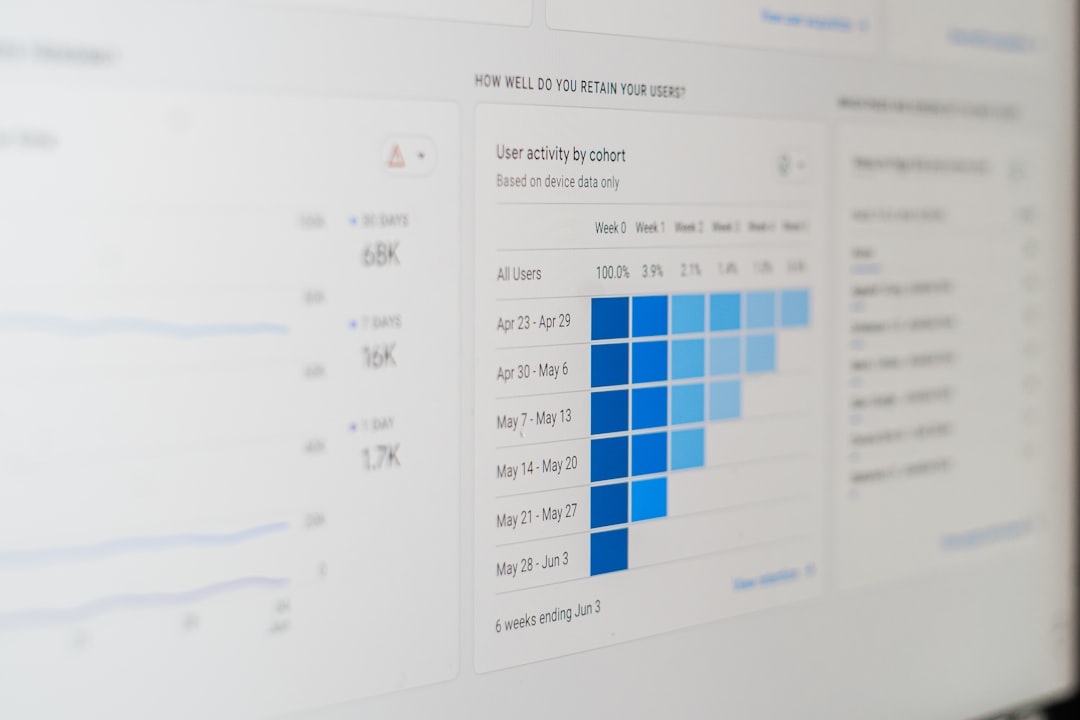
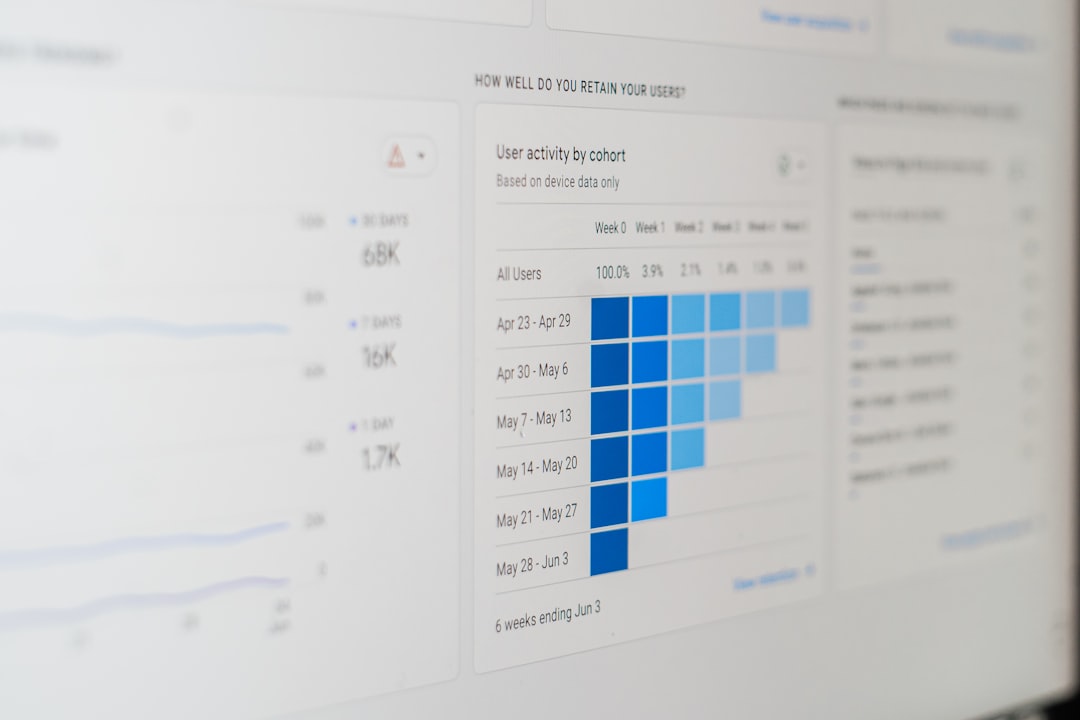
Modern annotation platforms do more than provide labeling interfaces. They integrate model-assisted tagging, auto-labeling, workforce management, analytics dashboards, and quality assurance layers. The result is a streamlined pipeline that supports large-scale AI training efforts across industries such as autonomous vehicles, healthcare, retail, and finance.
What to Look for in a Data Labeling Automation Platform
Before reviewing specific tools, it is important to understand the critical capabilities that define a reliable automation platform:
- Model-assisted labeling: Pre-labeling using machine learning models to reduce manual effort.
- Human-in-the-loop workflows: Review and correction stages to ensure accuracy.
- Quality control mechanisms: Consensus scoring, audits, and benchmarking.
- Scalability: Ability to handle multimodal data at enterprise scale.
- Workflow customization: Configurable pipelines for different annotation tasks.
- Security and compliance: Especially important for sensitive domains such as healthcare or finance.
With these criteria in mind, here are six platforms recognized for accelerating data annotation through automation and intelligent workflow design.
1. Labelbox
Best for: Enterprise teams seeking end-to-end data curation and model-assisted labeling.
Labelbox is a widely adopted training data platform that emphasizes model-assisted workflows. Its automation features allow teams to generate pre-annotations using existing models and refine them through human review. The system continuously learns from corrections, creating a virtuous cycle of improvement.
Key strengths:
- Automated data labeling using foundation models
- Built-in quality assurance and benchmark scoring
- Support for image, video, text, and geospatial data
- Dataset versioning and experiment tracking
Labelbox is particularly strong in computer vision use cases, where bounding boxes, segmentation masks, and keypoint detection require precision and scale.
2. Scale AI
Best for: Large-scale, high-complexity AI systems.
Scale AI combines automation tools with a managed workforce model. It leverages machine learning to pre-annotate data and routes tasks through structured review pipelines to maintain high accuracy rates.
Key strengths:
- Advanced automation for autonomous vehicle datasets
- Multi-stage review pipelines
- Robust data engine for continuous model improvement
- Enterprise-grade security
Organizations building mission-critical AI systems often rely on Scale AI for its ability to handle complex edge cases and large annotation volumes efficiently.

3. SuperAnnotate
Best for: Teams needing collaborative, automation-enhanced computer vision workflows.
SuperAnnotate offers powerful annotation interfaces combined with automation tools such as smart QA, consensus scoring, and model-assisted labeling. It focuses on delivering high annotation accuracy with minimized manual corrections.
Key strengths:
- AI-powered pre-annotation tools
- Collaborative project management features
- Advanced analytics and performance tracking
- Support for medical and enterprise datasets
Its clean interface and automation-assisted tools make it attractive for both research teams and production AI pipelines.
4. Label Studio
Best for: Teams seeking an open and highly customizable solution.
Label Studio provides flexibility and extensibility for organizations wanting more control over annotation logic. While it can be used for manual labeling, it also supports ML backend integration for automated pre-labeling.
Key strengths:
- Open-source foundation
- Customizable labeling configurations
- Integration with machine learning backends
- Multi-data-type support including audio and NLP tasks
Teams with in-house ML expertise often choose Label Studio to build tailored automation workflows that integrate directly into their model pipelines.
5. V7
Best for: Automation-heavy image and video annotation.
V7 focuses on intelligent auto-annotation features powered by neural networks. Its platform enables automatic object detection, segmentation, and classification suggestions that dramatically reduce annotation time.
Key strengths:
- Auto-annotation for images and videos
- AI-assisted labeling with interactive feedback
- Dedicated medical imaging capabilities
- Dataset management and versioning tools
V7 is particularly effective in medical and industrial applications where high-resolution imagery demands precise and scalable annotation workflows.
6. Dataloop
Best for: End-to-end ML data operations with automation at scale.
Dataloop blends data management, automated labeling, and pipeline orchestration into a unified environment. Its automation capabilities include AI model integration, task routing, and performance monitoring dashboards.
Key strengths:
- Automated task orchestration
- Integrated ML pipelines
- Custom workflow builders
- Support for video, image, and text datasets
Dataloop’s automation-first philosophy makes it suitable for organizations building continuous learning systems that require ongoing data refresh cycles.

Comparison Chart
| Platform | Automation Level | Best For | Data Types Supported | Customization |
|---|---|---|---|---|
| Labelbox | High (model-assisted) | Enterprise AI teams | Image, Video, Text, Geospatial | Moderate to High |
| Scale AI | High (managed automation) | Large-scale AI systems | Image, Video, Sensor Data | Moderate |
| SuperAnnotate | High (AI-assisted) | Collaborative vision teams | Image, Video | High |
| Label Studio | Moderate to High (ML integration) | Custom ML workflows | Image, Text, Audio, Video | Very High |
| V7 | High (auto-annotation focus) | Medical and industrial imaging | Image, Video | Moderate |
| Dataloop | High (workflow automation) | Continuous ML operations | Image, Video, Text | High |
How Automation Accelerates Annotation
Automation reduces labeling time in several measurable ways:
- Pre-labeling: Models automatically generate bounding boxes, tags, or classifications before human review.
- Active learning: Systems prioritize uncertain data samples for human review, optimizing efficiency.
- Consensus scoring: Automated agreement checks reduce redundant reviews.
- Workflow routing: Tasks are dynamically assigned based on annotator expertise.
When properly implemented, automation can reduce manual annotation time by 30% to 70%, depending on dataset complexity and model maturity.
Final Considerations
No single platform is universally superior; the right choice depends on your project’s scale, budget, regulatory constraints, and internal expertise. Enterprises building safety-critical systems may prioritize rigorous review pipelines and compliance certifications. Research teams may value flexibility and open integrations. Fast-growing startups may focus on speed and ease of onboarding.
What is non-negotiable, however, is the need for automation. As machine learning models demand ever-larger datasets, fully manual labeling processes become economically unsustainable. Automation platforms that incorporate model assistance, smart routing, and advanced analytics are no longer optional—they are infrastructure.
Organizations that invest in the right data labeling automation platform position themselves to shorten model development cycles, reduce costs, and maintain consistently high data quality. In a competitive AI landscape, efficiency in annotation is not just an operational improvement; it is a strategic advantage.