Imagine you see a strange animal for the first time. It has stripes like a zebra. It is big like a horse. You have never seen it before. But you quickly guess, “That must be a zebra.” How did you know? You used what you already understood about stripes, horses, and animals. That is the basic idea behind zero-shot learning. It is how AI makes smart guesses about things it has never seen before.
TLDR: Zero-shot learning is when an AI correctly identifies or understands something it has never been trained on directly. It works by using related knowledge and descriptive information. Instead of learning from many examples of one thing, it connects ideas and attributes. This makes AI more flexible, faster to adapt, and closer to how humans think.
Most traditional AI systems need lots of examples. Thousands. Sometimes millions. If you want a computer to recognize cats, you show it thousands of cat pictures. The system learns patterns. It learns fur shapes. It learns whiskers. Over time, it gets better.
But what if you do not have pictures? What if a new animal appears tomorrow? Do you need to start over with thousands of new examples?
That would be slow. Expensive. And sometimes impossible.
This is where zero-shot learning becomes exciting.
What Is Zero-Shot Learning?
Zero-shot learning is a method where an AI model makes predictions about categories it has never directly trained on.
Zero examples. Zero direct training. Yet still working.
How? Through shared knowledge.
Instead of memorizing every object in the world, the AI learns descriptions and relationships. It learns attributes such as:
- Has stripes
- Has wings
- Lives in water
- Has four legs
- Can fly
These attributes become building blocks. Like Lego pieces. The AI combines them to form new ideas.
If it already knows:
- A zebra = horse-like animal + black and white stripes
- A horse = large animal + four legs + mane
Then when it sees a “new” striped horse-like animal, it can guess zebra.
Even without training images labeled “zebra.”
How Traditional Learning Works
Before we go deeper, let’s compare.
Traditional supervised learning works like this:
- Collect labeled examples.
- Train the model on those examples.
- Test the model on similar examples.
It works well. But it has limits.
The world is huge. There are millions of objects. New products appear daily. New words. New diseases. New trends.
You cannot possibly label everything.
Humans do not learn like that. We do not need 10,000 examples to recognize something new.
We generalize.
Zero-shot learning tries to copy that ability.
The Secret Ingredient: Labels as Language
One powerful trick behind zero-shot learning is using language as a bridge.
Modern AI models, especially large language and vision models, understand text very well. They know what words mean. They know how words relate.
For example:
- “Tiger” relates to “stripes,” “big cat,” and “predator.”
- “Eagle” relates to “wings,” “beak,” and “flies.”
- “Penguin” relates to “bird,” “black and white,” but “cannot fly.”
If the AI understands these relationships, it can use them when facing something new.
Instead of saying, “I do not have training data,” it says, “Let me use what I know about similar things.”
A Simple Example
Let’s say you train an AI on:
- Dogs
- Cats
- Horses
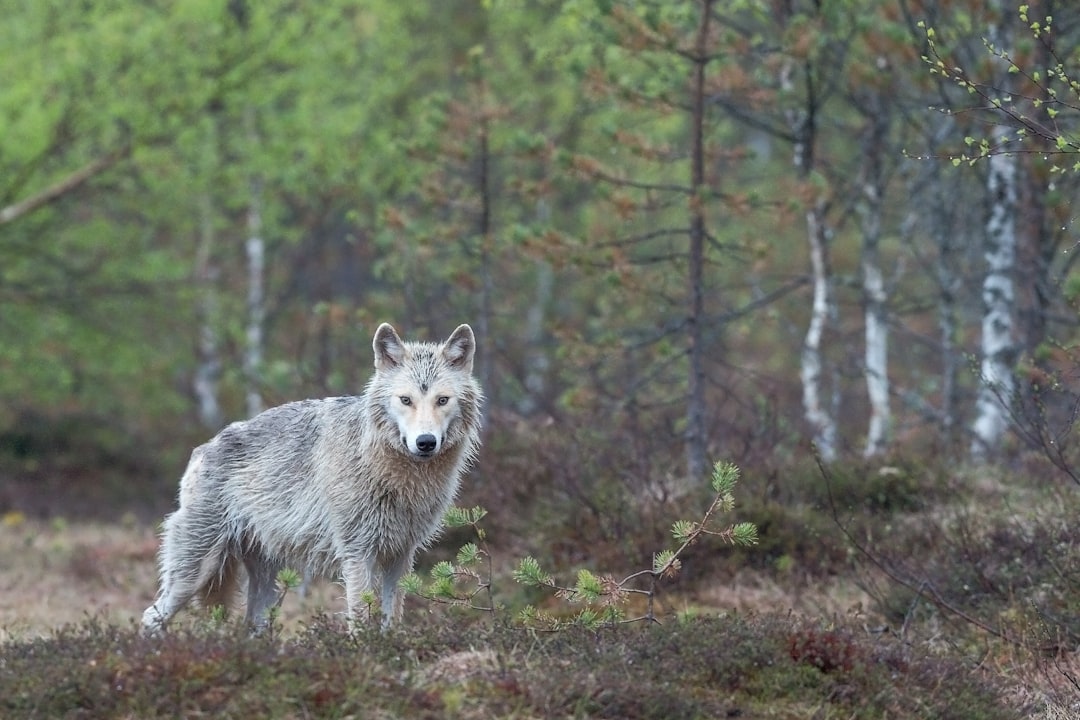
But you never train it on wolves.
However, you give it a description: “A wolf is a wild animal similar to a dog. It has sharp teeth and gray fur.”
Now the AI sees a wolf image for the first time.
It compares:
- Dog features it already knows
- The description of wolf
- The image features it sees
If they match closely enough, the AI says, “This is likely a wolf.”
No direct wolf training required.
Where Zero-Shot Learning Is Used
This is not just theory. It is already being used in real systems.
1. Image Recognition
Modern AI systems can recognize objects without specific training images. For example, you can type:
“Show me a red sports car in snow.”
The system understands the idea. Even if it has never seen that exact combination.
2. Language Translation
Some models translate between language pairs they were never directly trained on.
They learn shared structures. Then apply them.
3. Chatbots and Virtual Assistants
When you ask a strange or rare question, the system may not have a stored example. But it uses related knowledge to create a smart answer.
4. Medical Diagnosis
New diseases can appear. Zero-shot systems can use symptom descriptions to identify possible matches.
This can support doctors in early stages.
How It Actually Works Under the Hood
The technical side is more complex. But we can simplify it.
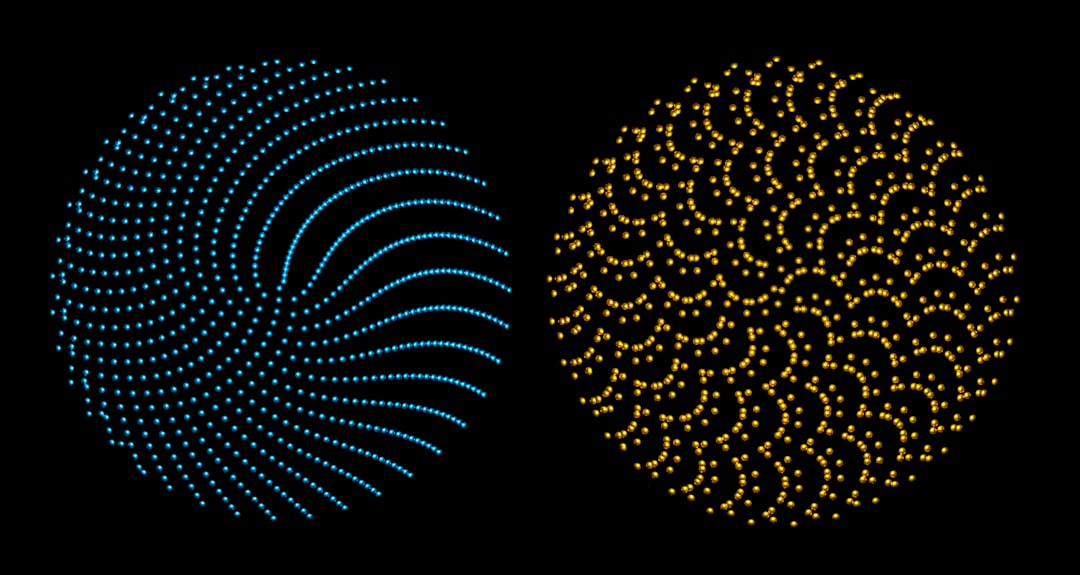
Zero-shot models often use a shared embedding space.
Think of embedding space as a giant map.
On this map:
- Similar ideas are close together.
- Different ideas are far apart.
For example:
- Cat and tiger are close.
- Car and banana are far apart.
Both images and words get placed onto this map.
So when an AI sees a picture, it finds where it sits on the map. Then it checks nearby word labels.
If the image position is close to the word “zebra,” that becomes the prediction.
This shared space is powerful. It connects vision and language together.
Why Zero-Shot Learning Matters
There are several big benefits.
1. Saves Time
You do not need to collect massive labeled datasets for every new category.
2. Handles Rare Events
Some things are rare. You cannot get many examples.
Think rare diseases. Or unusual wildlife.
3. Adapts Quickly
The world changes fast. AI must keep up.
Zero-shot learning helps AI adapt without full retraining.
4. Feels More Human
Humans learn concepts. Not just examples.
We hear a description. We imagine it. We recognize it later.
Zero-shot learning moves AI closer to that style of intelligence.
The Challenges
It is not perfect.
There are still difficulties.
- If descriptions are vague, predictions become weak.
- If embeddings are poorly trained, relationships break.
- Bias in training data can affect zero-shot decisions.
Also, zero-shot systems can sometimes sound confident but be wrong.
They are still statistical systems. Not magical minds.
Zero-Shot vs One-Shot vs Few-Shot
These terms are often confused.
- Zero-shot: No direct examples.
- One-shot: One example.
- Few-shot: A small number of examples.
Think of cooking.
Zero-shot is cooking a dish just from reading a description.
One-shot is tasting it once before cooking.
Few-shot is tasting it a few times.
Traditional learning is practicing 1,000 times.
The Future of Zero-Shot Learning
The future looks bright.
As models grow larger, they learn more relationships. More connections. More structure.
This improves zero-shot performance.
In the future, AI systems might:
- Recognize new inventions immediately
- Understand brand-new slang instantly
- Identify emerging cyber threats
- Support scientific discovery faster
This could make AI more flexible and useful across industries.
Education. Healthcare. Security. Art. Research.
Every field benefits from systems that adapt quickly.
A Simple Way to Think About It
Here is an easy mental model.
Traditional AI is like a student who memorizes flashcards.
Zero-shot AI is like a student who understands concepts.
If you understand what a “vehicle” is, and someone describes a “hoverboard,” you can guess it is a vehicle. Even if you have never seen one.
You connect ideas.
You reason using knowledge.
That is the heart of zero-shot learning.
Final Thoughts
Zero-shot learning is one of the most exciting steps toward flexible AI.
It shows that intelligence is not just about data. It is about relationships.
It is about understanding how pieces fit together.
By teaching machines shared concepts instead of just examples, we give them tools to explore the unknown.
And that is powerful.
The world is always changing. New ideas appear daily. New objects. New problems.
An AI that only knows yesterday struggles tomorrow.
An AI that understands concepts can take a leap.
That leap is zero-shot learning.
And it might be one of the keys to building systems that truly learn.