
Bootstrapped SaaS founders operate under constraints that venture-backed companies often never experience. Every dollar matters, hiring decisions carry long-term consequences, and growth must be engineered without burning excessive cash. In this environment, financial forecasting is not a corporate exercise—it is a survival discipline. The right forecasting tools allow founders to anticipate cash shortages, optimize pricing, plan hiring, and make grounded, data-driven decisions without financial guesswork.
TLDR: Financial forecasting is mission-critical for bootstrapped SaaS founders who cannot afford cash flow surprises. The most effective tools combine subscription revenue modeling, scenario analysis, cash flow visibility, and expense tracking. Spreadsheet-based forecasting, dedicated SaaS financial planning platforms, accounting integrations, and scenario modeling tools each offer distinct advantages. Choosing the right combination depends on your growth stage, technical comfort, and the complexity of your revenue model.
Below are four reliable and widely used financial forecasting tools—each appropriate for different stages of bootstrapped growth. Rather than suggesting a one-size-fits-all solution, this guide explains when and why each tool brings the greatest value.
1. Advanced Spreadsheet Models (Excel or Google Sheets)
For many bootstrapped founders, sophisticated spreadsheet modeling remains the most practical and cost-effective starting point. Despite the rise of SaaS financial tools, spreadsheets provide unmatched flexibility and complete control over assumptions.
Why it works: Spreadsheets allow founders to tailor financial logic precisely to their business model. You can create custom projections for Monthly Recurring Revenue (MRR), Customer Acquisition Cost (CAC), churn rates, expansion revenue, and runway—all in one place.
Key capabilities include:
- Subscription revenue forecasting based on churn and growth assumptions
- Cash runway calculation with variable burn rates
- Hiring impact modeling
- Scenario comparisons (base, conservative, aggressive)
The main advantage of spreadsheets is granular control. You can model cohort retention, pricing experiments, or annual vs. monthly billing differences without waiting for a software feature update.
However, this flexibility requires strong financial literacy and disciplined version control. Errors in formula architecture or hidden dependencies can lead to flawed projections. As a bootstrapped founder, you must treat your forecasting spreadsheet as a living financial dashboard—not a static document.
Best for: Early-stage SaaS (pre-seed to early product-market fit) founders comfortable with financial modeling.
2. Dedicated SaaS Financial Planning Tools (e.g., Finmark, LivePlan, or Pry)
As your SaaS grows beyond a handful of customers, forecasting complexity increases. Manual spreadsheets may become time-consuming, especially when invoicing systems, payroll, and subscription billing tools must be integrated. Dedicated financial planning platforms address this complexity.
These platforms are designed specifically for startups and SaaS businesses. They combine revenue modeling, expense forecasting, scenario planning, and runway calculations into structured dashboards.
Core benefits:
- Automated MRR and ARR tracking
- Pre-built SaaS metrics (LTV, CAC ratio, churn)
- Centralized financial reporting
- Integrated scenario modeling

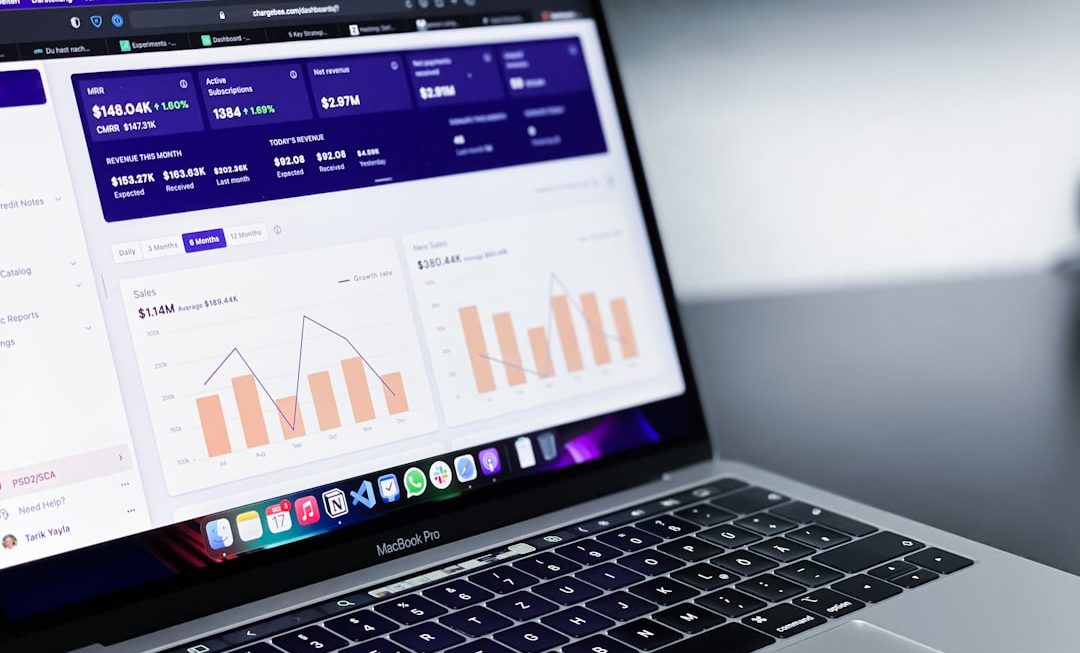
Unlike spreadsheets, these tools reduce the risk of formula errors and improve collaboration if multiple stakeholders are involved. They also offer intuitive data visualizations, making it easier to identify trends or upcoming cash shortfalls.
The downside is subscription cost—an important consideration for bootstrapped companies—and slightly less customization compared to spreadsheets.
Best for: SaaS founders with steady revenue who need structured forecasting and reporting infrastructure without building complex models from scratch.
3. Accounting Software with Forecasting Features (e.g., QuickBooks, Xero)
Many founders underestimate the forecasting capabilities embedded within modern accounting platforms. While accounting tools are traditionally used for bookkeeping and compliance, they now include predictive tools based on real-time financial data.
Accounting-integrated forecasting pulls from live revenue, expenses, payroll, and unpaid invoices—providing a more grounded view of cash flow.
Advantages include:
- Real-time cash flow projections
- Expense trend analysis
- Income statement forecasting
- Tax liability estimation
This approach is particularly valuable for bootstrapped founders focused on runway preservation. Instead of projecting hypothetical growth, you are forecasting from verified financial records.
Image not found in postmeta
However, accounting-based forecasting often lacks advanced SaaS subscription modeling features like cohort retention analysis or expansion revenue tracking. Therefore, it is best used in conjunction with another revenue-focused forecasting method.
Best for: Founders prioritizing cash flow stability and operational oversight over high-level growth modeling.
4. Scenario and Sensitivity Modeling Tools
Bootstrapped SaaS companies operate with little margin for error. A small increase in churn or ad spend can dramatically impact survival timelines. Scenario modeling tools—whether standalone platforms or structured spreadsheet extensions—help founders prepare for volatility.
Instead of forecasting a single revenue trajectory, scenario modeling tests multiple paths:
- What happens if churn increases by 2%?
- What if customer acquisition costs double?
- What if pricing increases by 10%?
- What if you delay hiring by six months?
This approach converts forecasting from prediction into preparation. A founder who understands downside risk is better equipped to react without panic.
Robust scenario modeling typically includes:
- Sensitivity tables
- Monte Carlo simulations (in advanced cases)
- Runway impact comparisons
- Break-even analysis
While advanced simulation tools may be excessive for early-stage startups, structured sensitivity analysis is essential for capital-efficient scaling.
Best for: SaaS founders planning expansions, pricing shifts, or hiring initiatives who need risk visibility before committing.
Comparison Chart: Which Tool Fits Your Stage?
| Tool | Cost | Customization | SaaS Metrics Support | Cash Flow Visibility | Best Stage |
|---|---|---|---|---|---|
| Advanced Spreadsheets | Low | Very High | High (manual setup) | Medium | Early-stage |
| Dedicated SaaS Planning Tools | Medium to High | Medium | Very High | High | Growth-stage |
| Accounting Software Forecasting | Medium | Low to Medium | Low | Very High | Operational stability phase |
| Scenario Modeling Tools | Low to High | High | Medium to High | Medium | Expansion planning |
How Bootstrapped Founders Should Choose
There is no universal “best” tool. The optimal forecasting stack evolves as your SaaS matures.
Consider these guiding principles:
- Early traction: Start with structured spreadsheets to conserve capital.
- Growing MRR and team: Transition to a dedicated SaaS financial tool for operational clarity.
- Cash flow sensitivity: Leverage accounting-based forecasting for accurate runway tracking.
- Strategic decisions ahead: Apply scenario modeling before committing to major expenses.
Many successful bootstrapped founders use a hybrid approach—combining spreadsheets for customization, accounting software for real-time accuracy, and scenario modeling for strategic decisions.
Final Perspective: Forecasting as Discipline, Not Prediction
Financial forecasting is not about predicting the future with precision. It is about building financial awareness and operational discipline. For bootstrapped SaaS founders, forecasting is inseparable from capital efficiency.
The true benefit of using these tools lies in clarity:
- Clarity on when to hire.
- Clarity on sustainable marketing spend.
- Clarity on pricing impact.
- Clarity on survival timelines.
Bootstrapping forces a certain seriousness. Without investor capital as a cushion, founders must understand their numbers at an intimate level. The right forecasting tools provide that understanding—not as abstract reports, but as actionable intelligence.
Ultimately, disciplined financial forecasting is a competitive advantage. It enables measured growth, reduces existential risk, and allows founders to scale with confidence rather than optimism alone.
In bootstrapped SaaS, clarity is currency—and forecasting is how you print it.